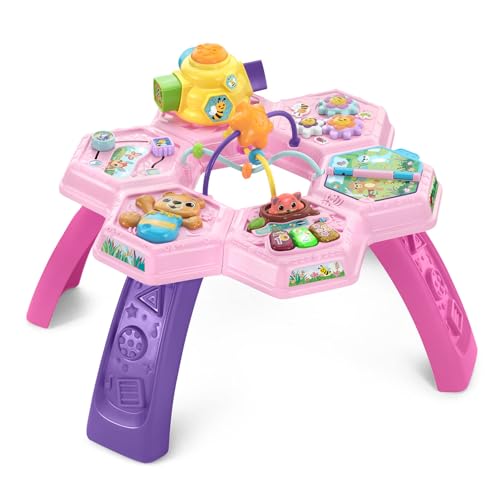
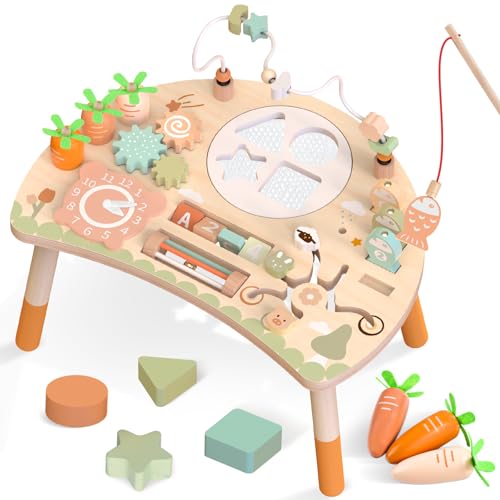
Choosing the Right Play Table for 2-Year-Olds: Key Sizing & Safety Standards
Between 18 and 36 months, toddlers transition from floor-based crawling play to standing-based play. A properly sized activity table encourages healthy posture, core balance, and independent play habits.
1. Standing Height & Ergonomic Stance
Ensure the play surface measures between 16 and 20 inches from the floor. This allows a typical 24-month-old to stand with their elbows bent at roughly a 90-degree angle, giving them optimal leverage to manipulate beads, levers, and puzzles without slouching.
2. Solid Wood Stability vs. Lightweight Plastic
Two-year-olds often lean their full body weight against tables while reaching for pieces. Solid wood tables with wide, flared legs offer superior anti-tip stability. Ensure all edges are rounded and pair your play zone with certified toddler safety essentials to maintain a secure environment.
🧩 Early Cognitive Link: Channel Fine-Motor Focus into Early Reading
The spatial recognition and visual tracking that toddlers develop while tracing bead mazes on activity tables are the exact neural foundations required for identifying letters and left-to-right reading patterns.
Accelerate this developmental bridge with the Reading Head Start Program, a proven early-learning system that transforms your child's emerging focus into effortless phonics and reading fluency in just 15 minutes a day.
Editor’s Practical Parenting Note: The "Single Feature" Focus Rule: If your activity table includes interchangeable sensory bins or loose pieces, avoid loading every bin at once. Overcrowded tables cause toddlers to scatter pieces instead of playing. Setting up one sensory element at a time (e.g., dry oats on Monday, water beads on Wednesday) deepens immersion and keeps solo play calm.
For more developmental play ideas, browse our companion resources on picture books for toddlers and interactive flash cards, or review our core learning tools for toddlers hub.
Frequently Asked Questions About Toddler Activity Tables
What is the ideal age for an activity table?
Activity tables are most beneficial for children between 12 and 36 months, when they are developing steady standing balance, hand-eye coordination, and self-directed problem-solving skills.
How do I stop my 2-year-old from climbing on top of the table?
Place the table away from couches and chairs that act as launchpads. If climbing occurs, gently redirect your child to a safe gross-motor climbing mat or outdoor play gym while keeping table rules consistent.
What are the best sensory bin fillers for 2-year-olds?
Safe, taste-tested kitchen pantry staples make the best fillers: dry oats, large uncooked pasta shapes, dried Cheerios, and warm, soapy water with measuring cups.