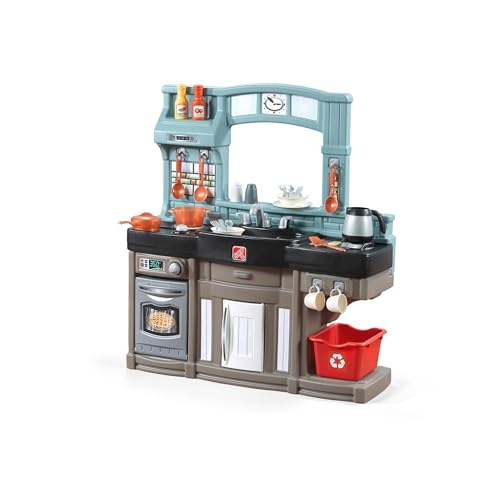
Choosing the Best Play Kitchen for 2-Year-Olds: Key Sizing & Safety Metrics
At 24 months, children are driven to imitate everything their caregivers do. Investing in an appropriately scaled play kitchen satisfies this developmental impulse while keeping dinner prep in the real kitchen calm and orderly.
1. Counter Height & Ergonomics
Measure the distance from the floor to the play counter before purchasing. A countertop height between 18 and 22 inches ensures your two-year-old can comfortably stir pots, open the oven door, and wash pretend produce in the sink without losing balance.
2. Wooden vs. Molded Plastic Construction
Wooden kitchens blend seamlessly into modern living room decor and provide a weighted, tip-resistant anchor. Molded plastic kitchens are lighter, wipe down effortlessly after messy play sessions, and often feature interactive clicking dials and electronic sizzle effects that capture shorter attention spans.
📚 Early Literacy Strategy: Turn Pretend Cooking into Reading Mastery
Two-year-olds experience a dramatic language explosion when labeling pretend foods, naming cooking actions, and categorizing ingredients. You can leverage this natural curiosity to give your child an extraordinary educational advantage before preschool.
Discover how to transform everyday play into foundational phonics with the Reading Head Start Early Literacy Program, a parent-led system designed to teach toddlers letter sounds, word recognition, and reading confidence in just 15 minutes a day.
Editor’s Practical Parenting Note: The "Dinner Prep Mirror" Strategy: The witching hour between 5 PM and 6 PM is when most 2-year-old clinginess occurs. Set your toddler's play kitchen adjacent to your real kitchen. Hand them safe scrap items—like empty spice jars, dry pasta in a sealed container, or silicone spatulas—and invite them to "cook dinner with you." Mirroring your routine defuses separation anxiety instantly.
For more purposeful play ideas, explore our curated collections of toddler building blocks, soft plush cuddle buddies, and hands-on kids musical instruments, or return to the main engaging toys for toddlers hub.
Frequently Asked Questions About Toddler Play Kitchens
What is the best age to introduce a play kitchen?
Between 18 and 24 months is the ideal window. At this stage, toddlers possess steady gross-motor balance, can manipulate cabinet doors, and begin engaging in symbolic pretend play.
How do I prevent a wooden play kitchen from tipping over?
Always secure freestanding play furniture to a wall stud using the manufacturer-provided anti-tip safety bracket, especially for active toddlers who attempt to climb counter ledges.
What pretend food is safest for two-year-olds?
Choose oversized, wooden, sliceable velcro produce or soft, food-grade silicone accessories that cannot be swallowed or crushed into small, sharp fragments.